Carbon Legacy Trees LLC holds exclusive rights to the Phoenix Tree — an epigenetically enhanced species that sequesters 10x the CO₂ of a conventional tree, harvests 15 times, and yields graphene as a combustion byproduct. Four compounding revenue streams on every acre planted.
Post-epigenetic modification permanently unlocks the Phoenix Tree's carbon metabolism. Not GMO. Not synthetic. A biological upgrade that compounds every advantage nature designed into a tree — available now, exclusively through Carbon Legacy Trees LLC.

The inaugural Phoenix Tree farm demonstrates scale, validates carbon measurement, and generates the first vintage of verified credits. South Dakota land economics and favorable rural tax policy make it the ideal launch market.
Enhanced photosynthesis pathways capture and store 10 times the CO₂ of a standard tree. Every acre generates verified credits eligible for voluntary and compliance carbon markets.
Within 24 months roots reach sub-surface water tables with no irrigation. Zero ongoing water infrastructure cost after Year 2 — dramatically lowering per-acre operating expense at scale.
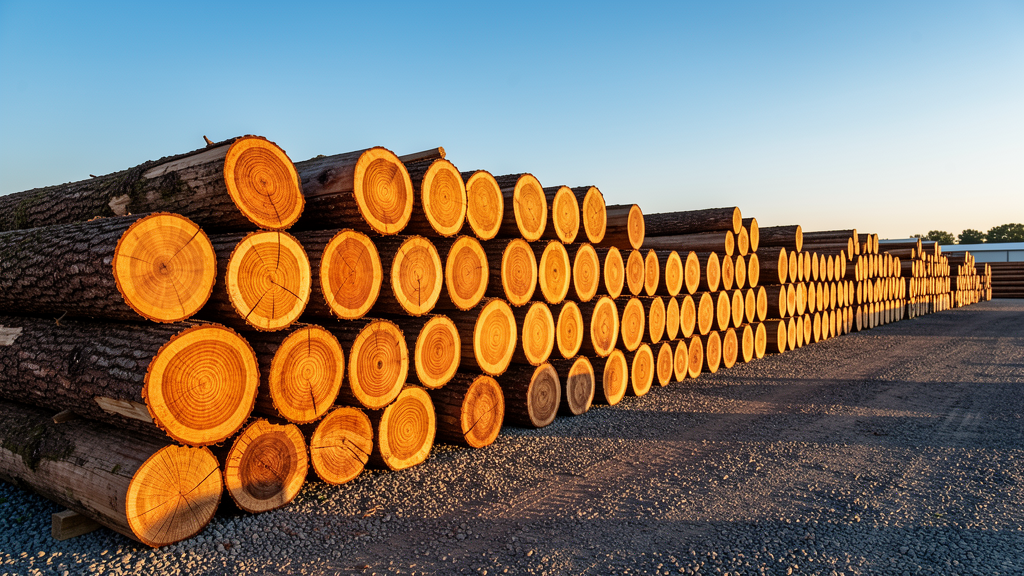
Phoenix Tree lumber is among the densest commercially available hardwoods. Structural-grade yield commands premium pricing. Each of 15 harvest cycles stands alone as a meaningful revenue event.
When Phoenix Tree wood is combusted, the carbon-dense byproduct yields graphene — valued at $100–$300/kg in industrial applications. Waste becomes a premium commodity stream.
Post-epigenetic modification works with the tree's existing genetic expression — not foreign gene insertion. Favorable regulatory profile for USDA, EPA, and voluntary carbon registry certification programs.
Wood becomes lumber. Combustion becomes graphene. Sequestration becomes a credit. The credit becomes capital. The capital plants more trees. A fully closed production loop on every acre.
Most tree farms have one exit — sell the lumber. Phoenix Tree farms generate income across four independent channels that compound over 15 harvest cycles. Carbon Legacy Trees holds the exclusive commercial rights to all four.
Every Phoenix Tree acre generates verified CO₂ sequestration credits annually. With 10x the capture rate, a single acre produces the credit equivalent of 10 conventional acres. CLT holds exclusive rights to sell these on voluntary markets.
Beyond voluntary credits, Phoenix Tree farms generate federal and state carbon tax credits. Corporations purchase these at a discount — eliminating tax exposure while funding reforestation. CLT holds exclusive origination rights.
Phoenix Tree produces extremely dense, durable hardwood. Fifteen harvest cycles from the same planting means recurring lumber revenue. Dense-grain Phoenix wood commands premium structural pricing on every harvest.
Combustion of Phoenix Tree wood yields graphene — one of the most valuable industrial materials on earth. As EV battery, semiconductor, and composite demand grows at 38%+ annually, this stream scales with the market.
| Revenue Stream | Basis | Timeline | Est. Value | Notes |
|---|---|---|---|---|
| Voluntary Carbon Credits | 10x sequestration × 10,000 trees | Year 1 onward | Recurring Annual | $6–$30/tonne; registry verified |
| Carbon Tax Credits | Federal / state tax attribute | Filing year eligible | Institutional sales | Discount-to-face-value model |
| Hardwood Lumber — Harvest 1 | Premium dense hardwood, 10,000 trees | Year 3–5 est. | Major harvest event | 15 regenerative cycles |
| Graphene Byproduct | Combustion pathway | Concurrent with harvest | $100–$300/kg | Industrial materials market |
| Combined 15-Cycle Value | All 4 streams × 15 cycles × 10,000 trees | Compounding multi-stream lifecycle return | ||
Projections are illustrative. Consult your financial and tax advisors before any investment decision.
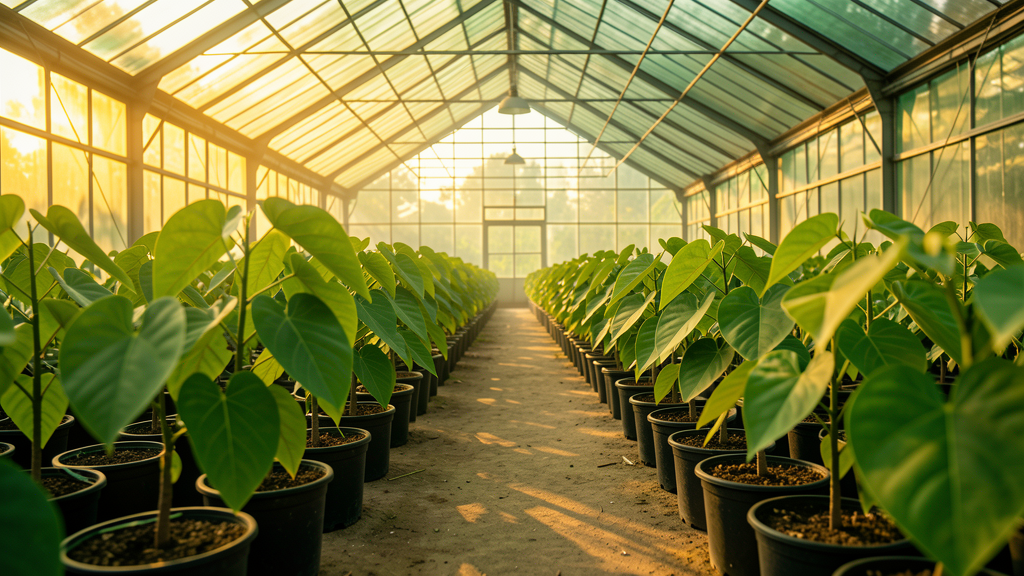
The Phoenix Tree begins as a standard seedling — then diverges entirely. Post-epigenetic modification permanently alters cellular carbon metabolism before the first leaf unfurls. What germinates is something the forestry world has never seen.

After each harvest, the intact root system — now deep enough to access groundwater independently — drives rapid regeneration. Costs are fixed at planting. Revenue compounds across 15 cycles, with carbon credits flowing continuously throughout the entire lifecycle.

At maturity, a Phoenix Tree plantation is one of the most productive land-use configurations on earth — sequestering carbon, preparing for harvest, and standing as a documented, verifiable asset on the balance sheet of every partner involved.
Carbon Legacy Trees serves investors who want multi-stream carbon asset exposure, landowners seeking returns from idle acreage, and corporations needing carbon credit and tax solutions.
Capital invested today plants trees that generate four independent revenue streams for 15 harvest cycles — with carbon credit income starting Year 1 and lumber income beginning at first harvest.
Own rural acreage with minimal yield? CLT plants, operates, and manages — you receive revenue share on carbon credits and harvest events with zero capital requirement.
CLT is the exclusive originator of Phoenix Tree carbon credits and tax attributes. We sell both voluntary market credits and federal tax attributes — letting your organization address climate commitments and tax liability simultaneously.
Phoenix Tree lumber is among the densest hardwoods commercially available. When that same wood is combusted, it yields graphene. Two premium material outcomes from a single harvest event — on a tree that grows back and does it again 14 more times.

CLT manages every step — planting, irrigation, registry certification, harvest coordination, and credit sales. Partners provide land or capital. CLT provides everything else.
At Carbon Legacy Trees, we believe the earth does not need to be conquered. It needs to be understood.
The Phoenix Tree is not an invention. It is a revelation — a living organism whose full potential had simply never been unlocked. When we plant one, we are not taking from the ground. We are entering into an agreement with it. The tree gives us carbon sequestration, dense hardwood, fifteen harvests, and graphene from its very combustion. In return, we give it water, land, protection, and permanence. That is not agriculture. That is partnership.
This principle extends to every relationship we build. When a landowner opens their acreage to us, they are not leasing ground — they are joining a living enterprise that pays them across decades, enhances the value of their property, and leaves their land more productive than they found it. When an investor backs a Phoenix Tree farm, they are not buying exposure to a single commodity — they are planting four revenue streams that compound across fifteen harvest cycles.
Every party at our table wins. Not as a strategy. As a requirement. We do not structure deals where one side captures the value and another absorbs the cost. The win-win-win is not a tagline for us — it is the test every deal must pass before we shake hands on it.
We are building a company that honors the land, its partners, and the people who believed in it first. This is what a legacy looks like.
Carbon Legacy Trees exists to honor the full potential of the earth and the people who steward it. We plant trees that sequester carbon, harvest premium hardwood, and yield graphene — and we structure every deal so the investor, the landowner, the buyer, and the land itself all come out ahead. True abundance is not extracted. It is grown, shared, and replanted.
We are building the most efficient carbon sequestration infrastructure on earth — and giving investors, landowners, and corporations a piece of every dollar it generates.
Carbon Legacy Trees LLC — South Dakota, 2025. 10,000 trees committed. Exclusive Phoenix Tree commercial rights.
Voluntary carbon markets transacted $535M in 2025. Corporate net-zero pledges are creating sustained demand for high-quality credits. Transferable tax credits made carbon a tax strategy. And graphene supply chains are being built right now.
Voluntary carbon credit issuances grew 8% year-over-year in 2025. Corporate ESG mandates are pushing institutional buyers who demand high-quality, well-documented sequestration credits into the market.
Congressional authorization of transferable credits opened a new buyer class: CFOs who want to eliminate tax liability at a discount. Carbon tax credits are no longer just a climate tool — they are a corporate finance tool.
Graphene applications in EV batteries, semiconductors, and composites are driving the global market toward $1.08B+ at 38% annual growth. Phoenix Tree combustion positions CLT to supply into this fast-growing demand.
Whether you own land, have capital to deploy, need carbon credits for ESG compliance, or want to offset corporate tax liability — Carbon Legacy Trees has a structure for you.